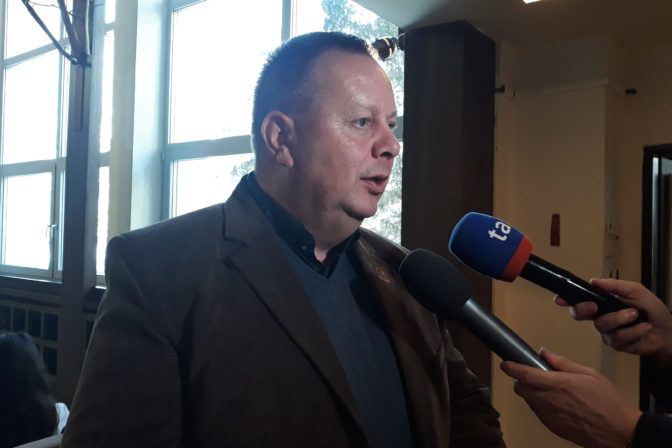
BRATISLAVA, May 2, (WEBNOVINY) — Chairman of the Freedom and Solidarity party (SaS) Richard Sulik is counting on the strongest opposition party SMER-SD that it will not support the European Stability Mechanism (ESM), II. “I hope that colleagues from SMER will not be all mouth and trousers again and stick to what they said they would do in the crucial moment, which is that the party would only back ESM II when the coalition is unanimous. Only then we would have a real chance not to join the new eurozone bailout instrument,“ wrote Sulik in his latest blog. Sulik considers ESM II to be deception of taxpayers and for that reason SaS will not give its thumbs-up to ESM. He stressed that Slovakia could build 300 kilometers of highways for EUR 6 billion that would otherwise be used for Greek, Portuguese and “God knows“ whose pensions. “Complete perversion of this project and all its perverse solidarity can be clearly seen in the source of funds for Slovakia’s potential deposit in ESM. Proposals also include the one suggesting that money from privatization would be used for Slovakia’s deposit. One does not need to be a populist to ask a question whether it is right to sell values created by our grandparents to cover Greek pensions,“ stressed the SaS chief.
Sulik also underscored that profit and losses are mostly private in capitalism, while it is the other way around in socialism, where profits and losses are public. “ESM, with regard to banks, is a great construction that fuses advantages of capitalism and socialism – privatizes profits and makes losses socialist. If a bank has qualified and reliable managers, the profit they generate belongs to bank’s shareholders. If a bank has unqualified and irresponsible managers or simply fails to post good results, taxpayers will club together to cover the loss,“ added Sulik.
The new eurozone permanent bailout instrument, European Stability Mechanism, should replace the existing temporary stabilization system in 2013. The mechanism is intended to assist countries that land in trouble with refinancing their debt. The initial credit capacity of the new ESM should reach EUR 500 billion.
SITA